On Everything I’ve Learned from Anger After Being Swallowed by It
And how to live by your own well

There are some things you should hold onto, and others it’s probably best to let go. I have a tendency to hold onto everything—just in case.
I’ve yet to decide if this makes me a good journalist or a terrible one. If it predisposes me to the craft, or if it should disqualify me entirely.
Every day, everywhere around the world, there is a long list of ongoing tragedies demanding our care, our grief, our attention. Globalization and the rise of media—social and otherwise—have made it possible for us to witness, or feel aware of, nearly all of them.
Now, me being me, I think this is mostly a good thing—I like to believe there are more humanitarians today than ever before. People care more deeply about those they will never meet, whose lives exist on the other side of the globe—a truth that feels, in its own way, profoundly good.
But, I’m now beginning to understand how this good thing can also be a very very bad one.
You may have heard this: the human brain was only built to hold a community of about 150 people—their histories, opinions, daily struggles. This concept, coined by anthropologist Robin Dunbar, reflects a natural cognitive constraint on the depth and breadth of our social circle. Dunbar’s number of 150 is a product of cognitive evolution, reflecting the finite capacity of our brains to manage and nurture social ties.
In other words, while our networks can expand endlessly online, our brains can only truly absorb, manage, and nurture the relationships with and realities of 150 people—leaving us vulnerable to emotional overload when we try to carry the suffering of the world.
Media, then, was an awesome invention, truly remarkable in its ability to inform the public at large. But much of it has become something else: a conduit of today’s ubiquitous cynicism, nihilism, and—worst of all—hopelessness.
Our nervous systems were not built to hold the suffering of the entire world. When you see images of starving children, hospitals being bombed, families torn apart, lives destroyed—your body absorbs that. It becomes a stressor, whether you want it to or not.
Recently, I’ve been learning a lot:
One thing I’ve learned about myself: I’ve been very, very angry—for a long time, longer than I realized—and that anger has only grown in the last few months. I write about things I believe are important, things worthy of my time and attention—that’s why I am a journalist. But my tendency to hold on to it all, and then write about it to make others hold on, too, has been slowly eating me away, bite by bite.
But through it all, I’m also learning—more than ever—that my energy is finite. My capacity to care is not the boundless well I once imagined. And my anger is the proof, day after day, of how little I truly have to give, how my care reaches only so far before leaving me caught in a loop of furious doom-scrolling.
What have I learned from anger? Without a place for it to go, without resolution, it will inevitably turn inward and consume you. And guess what? Getting trapped in that endless loop of doom-scrolling is a surefire way for it to have nowhere to go at all.
If the last few months have taught me anything, it’s this: our hearts—as bloody as they may be—only do so much. And bleeding endlessly doesn’t always lead to meaningful change.
Studies show that too much exposure to the world’s suffering doesn’t inspire more action—it often leads to less, especially where it matters most. We scroll. We watch. We feel. And then we collapse, drained, cynical, empty-handed.
A heart that aches for the world has no strength left to act where it counts.
This has been one of the harder pills for me to swallow, I’ll admit. I like to care!! I’ve long known it’s cool to care. And now you’re telling me that caring too much can be… bad?!
So what do we do? Well, my fellow silly little bleeding hearts, we have to pick and choose the hills upon which we’d happily die—carefully selecting those that matter most to our silly little bleeding hearts.
This doesn’t mean we should pull up the wool or live with blinders on. It means first understanding the edges of your well—your energy, your reserves—honoring them, and respectfully abiding by them every day. I imagine it’s like a quiet, daily prayer. (I say “imagine” because, at the time of writing, I have yet to fully adopt this practice—but I am earnest in my attempt.)
Not letting every headline, every tragedy, every gut reaction pour into you, because it won’t help. It’s draining you, leaving you listless, while your own circle—friends, family, community—might desperately need what you have to offer, if you’ve anything left.
Just because it’s killing you doesn’t mean you can pretend it’s for a greater cause. You’re not some crusader of it all—because it’s not helping anyone else, either. Another big, bulky pill to swallow, I know! But chug some water, sister Christian, there’s work to do!!
My advice?
Choose the things that matter to you. A handful, even one or two, will do. And devote your bleeding heart to them.
To live by your well is something I think we all owe to ourselves—and we owe it to everyone else too.
I have a picture of a quote somewhere—I’ll try and find it—it’s by Goethe, I think, and it says:
“Jeder kehre vor seiner eigenen Tür, dann wird die ganze Welt sauber sein.”
It means, Let everyone sweep in front of his own door, and the whole world will be clean.
I think about that a lot.
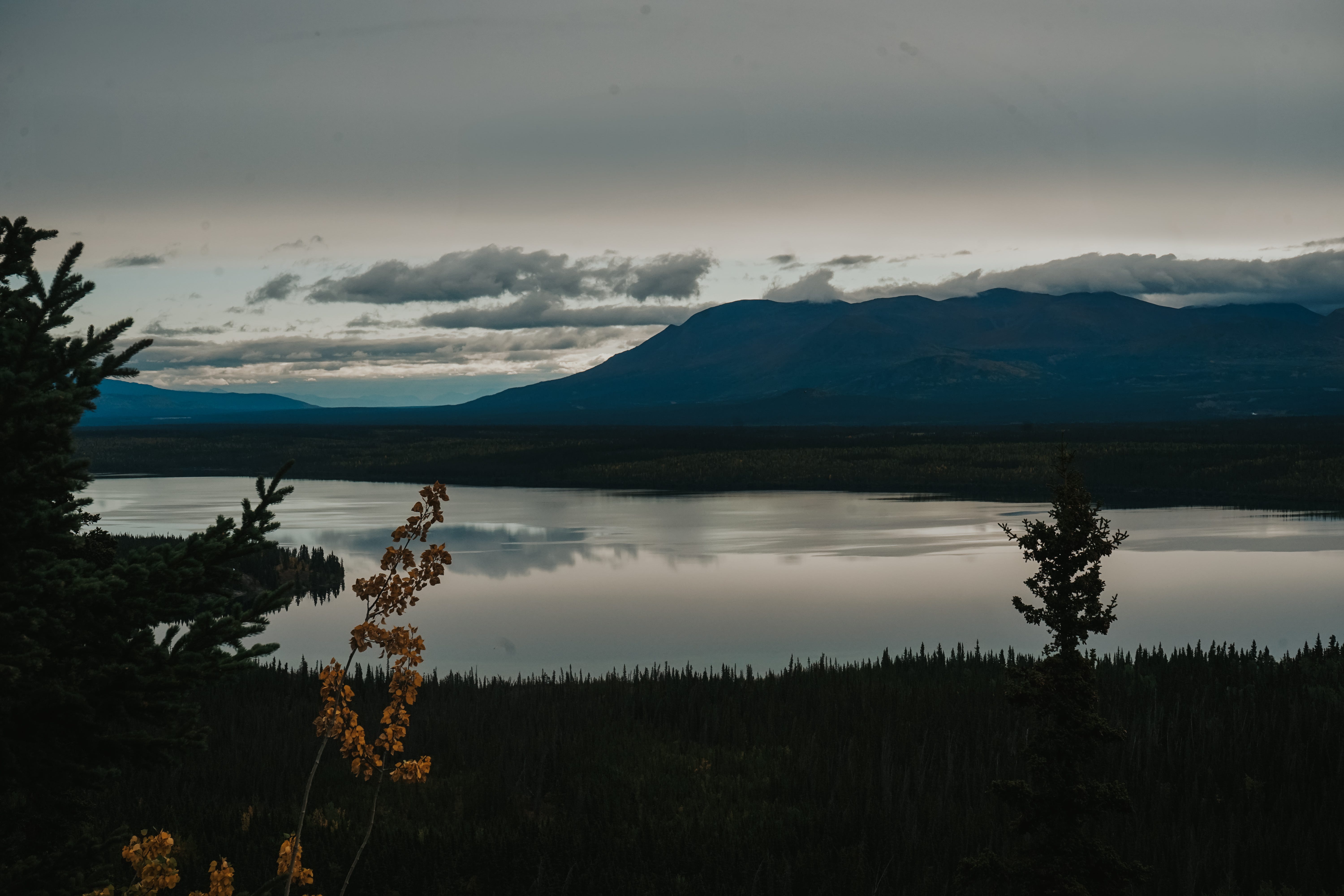
I just got back from a 10-day trip up in the Yukon territory of Canada—remote, untamed, and impossibly beautiful—backpacking, rock climbing, and sleeping out in the wilderness in a converted school bus. You know, the usual work trip. Being off-grid and sharing tight quarters with a small group of like-minded people isn’t the only way to be reminded of what truly matters—but it’s one way, and it sure as heck works for me.
Here’s a small selection of photos I took during the trip.
As always, thanks for being here.